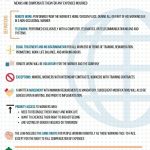
Remote working Law in Spain
The Spanish government has finally regulated the law on remote working in Spain, which lacked specific regulations and which, since the beginning of the pandemic, has increased significantly in the country.
The Spanish government has finally regulated the law on remote working in Spain, which lacked specific regulations and which, since the beginning of the pandemic, has increased significantly in the country.

This informative note deals with the procedural and organizational measures to deal with COVID-19 in the field of the Administration of Justice in Spain, as included in Law 3/2020, of 18 September. We analyze its chapters and summarize their most relevant points.

Royal Decree-Law 23/2020 approves energy measures for economic recovery after the COVID-19 crisis and represents a boost for renewable energies (RES-E) and the energy transition in Spain.

RD 901/2020 on equality plans and their registration in Spain establishes, among other things, that all companies with more than 50 employees must implement an equality plan before 1 March 2022.

RD 902/2020 of 13 October on equal pay for women and men establishes, among other things, that all companies, regardless of their size, must keep a salary record of all their employees, including managers and senior executives.
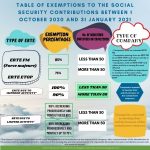
The Royal Decree-law 30/2020 on social measures in defence of employment came into force on 30 September 2020. The following table summarizes the exemptions from the payment of social security contributions between 1/10/2020 and 31/1/2021.

The Royal Decree-law 30/2020 on social measures in defense of employment addresses extensions for force majeure Temporary Redundancy Plans, as well as Temporary Redundancy Plans due to economic, technical, organizational, or production reasons linked to COVID-19. It also introduces Temporary Redundancy Plans for impeded or limited activities.

The tax regulation in Spain (Royal Decree 1619/2012) establishes the language and currency to invoice. The language of invoices The company can issue and receive invoices in any of the …

Solar plants in Spain require many legal requisites, including securing the land rights where they will be located, requesting access points and connection to the electricity grid and depositing guarantees.
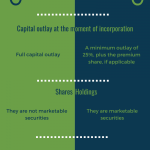
In Spain, companies can incorporate as either an S.A. (Sociedad Anónima) or an S.L. (Sociedad Limitada). Each has distinct legal and financial implications regarding capital requirements, liability, and shareholder structure, making them suited for different types of businesses.

© 2026 Mariscal Abogados, S.L.P.
Legal NoticePrivacy PolicyCookies Policy