
Practical guide on the Share Purchase Agreement
The contract of the sale of shares or Share Purchase Agreement, is one of the most useful contracts in the practice of acquiring mercantile companies. It consists of four main phases: the contract of confidentiality, the letter of intent, the due diligence procedure and the signing of the contract of the sale of shares.

False self-employment: a punishable practice in the company
The features of employment in Spain are established under art. 11 of the Workers’ Statute. Their fulfilment indicates an employment relationship of third parties or subject to employment and, therefore, protected by the Statute of Workers.

Religious freedom in the Spanish work environment
One of the main conflicts that occurs increasingly often in the day to day of companies is a collision between exercising the business organization’s authority (protected by the right of entrepreneurial freedom) and the protection of the fundamental rights of employees, such as religious freedom.

The abusive exercise of the shareholder’s right to information
The shareholder’s right to request for information about the company is a fundamental right. However, it is not an unlimited or absolute right. In this regard, the Spanish Supreme Court has already ruled this in different judgments.

Playing soccer with clients or attending events outside of normal business hours is working time
Three recent judgements delve into the concept and legal interpretation of working time in Spain. The Supreme Court has declared that hours dedicated to shifts on Sundays and playing soccer with clients should be treated as working time.

The Share Purchase Agreement: Signing and Closing
The purchase agreement of corporate shares or holdings is a document that establishes conditions that will govern the transfer of the company and it applies to all forms of non-listed companies.

The new General Data Protection Regulation (GDPR)
With the new general data protection regulation (GDPR) going into effect, the authorities can act ex officio or on complaints. Companies that fail to comply with the legislation can expect considerable economic sanctions

Fees and taxes for real estate acquisitions in Spain
Acquisition of real estate in Spain can generate various fees for which, without careful preparation, the buyer can quickly find himself liable. Furthermore, the transaction can accrue taxes, which can be quite different for the buyer and the seller.
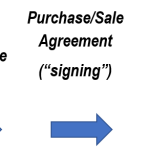
Phases of the process of acquiring a company
Investment in Spain through acquiring shareholdings in a Spanish company requires a series of steps in order to ensure the successful conclusion of the transaction. These are, in brief: the letter of intent, the due diligence process, the signing of the purchase/sale agreement, the closure of the transaction and the closing operations, or post-closing of the transaction.

The filing of annual accounts of branches of foreign companies in Spain
One of the most problematic issues facing Spanish branches of foreign companies is the filing of accounts. In Spain, the Mercantile Registry Regulations provide for the possibility of filing the accounts of the company itself, when there is the so-called ‘equivalence control’ in both countries, or by submitting ad-hoc accounts in relation to the activity of the branch in Spain.