
Timing rules in the calculation of collective dismissals
The new CJEU judgment questions the interpretation of Spanish case law regarding the calculation of collective dismissals thresholds, also known as ‘the timing rules’.
The new CJEU judgment questions the interpretation of Spanish case law regarding the calculation of collective dismissals thresholds, also known as ‘the timing rules’.

Spanish capital companies must submit their annual accounts to the General Meeting for approval and file them before the Commercial Registry. The entry into force of RD 2/2021 on 1/2/2021 opens the door to apply the sanction regime for failure to do so in due time.

Spain’s Entrepreneurial Nation 50 measures put the focus on the startups, and,pursue four goals: to accelerate the maturity of investment in Spain; to attract, retain and develop talent; to step up the scalability of Spanish companies; and to turn the public administration into an entrepreneurial sector that generates favourable regulatory.

The Cash Pooling agreement facilitates the financial operations of companies, especially when operating in different countries. It allows a daily set of automatic inter-company loans to optimize the group’s global position, obtaining a single balance for each bank with which it operates.
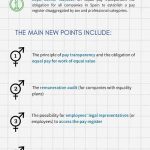
Royal Decree 902/2020 on equal pay incorporates, among others, the obligation for companies to establish a pay register disaggregated by sex and by professional category.

The European order for payment procedure is a creditor-friendly procedure increasingly used for cross-border debt collection within the European Union. However, its successful implementation in Spain is sometimes more complicated than expected. Find out the best practices for conducting a European order for payment procedure in Spain!

Royal Decree-law 23/2020 approves a new framework that identifies a series of steps to develop energy projects in Spain. It highlights a higher degree of compliance and certainty for the energy market but implies a higher level of risk for developers and investors.

During the COVID-19 pandemic, arbitration stands out as an advantageous alternative to settle legal disputes between companies. The ordinary jurisdiction has suffered a slowdown in its processes and does not provide the fast and effective response demanded by current market operators.

Royal Decree 901/2020 of 13 October regulates equality plans and their registration in Spain, and amends Royal Decree 713/2010, of 28 May, on registration and filing of contracts and collective bargaining agreements. This measure aims to reduce the wage disparity in Spain and achieve equality between men and women in the workplace.

The arbitration clause in commercial contracts allows the parties to submit the resolution of any disputes to the decision of an arbitration court. Its pros and cons need an assessment on a case-by-case basis.

© 2026 Mariscal Abogados, S.L.P.
Legal Notice | Privacy Policy | Cookies Policy