Company Law

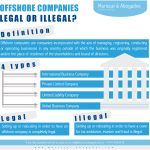
Offshore Companies, legal or illegal?

Offshore companies are incorporated with the aim of managing, registering, conducting or operating businesses in foreign countries (any country outside of which the business was originally registered and/or the place of residence of the shareholders and board of directors).


The truth behind offshore companies, legal or illegal?

Businesses are relocating and setting up in foreign countries to avoid paying taxes in their home countries. This is having a negative impact on the EU. The EU Commission is currently trying to crack down on multinationals using tax avoidance, tax evasion and tax fraud.

Prices within the Spanish advertisement law

A summary of several price advertising techniques that companies can use to ensure they are at the top of the competition. Numerous laws regulate these techniques so that companies cannot misuse and/or fool consumers. These price advertising techniques all have something to do with lowering the price, using the price to lure in customers, or enticing consumers into competitions so that they will spend more money.

Special Tax Regime of Real Estate Investment Trust (REIT) in Spain

Real Estate Investment Trust (REIT) in Spain, known as SOCIMI (sociedades anónimas cotizadas de inversión inmobiliaria), can benefit from the special tax regime, which consists of a 0% Corporate Income tax rate and a 95% reduction in the Property Transfer Tax, among other benefits.

The Entrepreneurial Limited Liability in Spain

Law 14/2013 on support to entrepreneurs and their internationalization (“Entrepreneurs Law”), published in the BOE on Saturday 28 September 2013, aims to support entrepreneurs and entrepreneurship. In commercial and company law matters, the law creates entrepreneurial limited liability, successive formation of limited liability companies, and the introduction of measures to expedite the incorporation of companies and simplify certain corporate obligations.

The legal regime of holding companies in Spain

Due to the novelties introduced by the 2015 tax reform, it is important to check the composition of a company’s assets in order to evaluate its possible qualification as a holding company and to conduct sound tax planning.

The new 2015 Spanish Corporate Governance Code for listed companies

The new Spanish Corporate Governance Code for listed companies aims to improve the corporate governance framework. This improvement can be done by boosting competitiveness and building transparency. In practice, one of the main principles presented by the Code is the “comply or explain” principle which distinguishes between binding rules and recommendations.

Legal forms of company formation in Spain

The Spanish Corporation Law (Ley de Sociedades de Capital, LSC) distinguishes between the legal forms of a corporation, partnership and individual entrepreneurship when forming a company in Spain. This is a list of the main features regarding shareholders, equity, liability, founding costs, name assignment and notarial certification.

Means to avoid corporate criminal liability in Spain

For a company to avoid criminal liability for crimes committed by third parties in the name of, or on the behalf of the company, the company must have a prevention plan for crimes and rely on a compliance officer.