Energy law in Spain (3): Applicable deadlines for project development and their consequences
Renewable energy projects development in Spain requires a security deposit of EUR 40/kW. Linking this requirement to strict deadlines is encouraging active projects. Learn more about the most relevant regulations: Royal Decree-Law 23/2020, dated June 23, 2020, and the latest Royal Decree 1183/2020, dated June 23, 2020.

Energy Law in Spain (2): The Interlocutor Único de Nudo (IUN)
Royal Decree 1183/2020, of 29th December 2020, includes substantial modification regarding the granting procedure concerning grid connection feed-in permits for energy projects in Spain. Important innovations concern the unification of the procedure for the award of grid connection and feed-in permits as well as the often-criticised ‘Interlocutor Único de Nudo’ (IUN). Learn about the most relevant aspects of the new regulation!

Customer compensation in the agency contract in Spain
The agency contract is a widely used distribution contract in Spain. The Agency Contract Law regulates it, providing several compensations for the agent in case of termination by the entrepreneur. Customer compensation is the most characteristic among those various compensations.

Important changes to the Capital Gains Tax in Spain
The Royal Decree-Law 26/2021 incorporates new rules to address the treatment of the Capital Gains Tax in Spain (IIVTNU). Article 104.5 of the Law Regulating Local Tax Office, which includes a new condition to not being subject to the tax, and Article 107 (which establishes two new calculation methods for the tax base of the Capital Gains Tax, in the case of capital gain) stand out.

The disciplinary dismissal in Spain
Collective agreements may establish additional formal requirements to formalize a disciplinary dismissal. Their non-compliance may result in administrative sanctions for the company.

The Real Estate Lease-Purchase Contract in Spain
The real estate lease-purchase contract allows the rental of a property for a specific period and grants the tenant the right to buy it at a pre-determined price at the end of said period.

The foreign creditor in bankruptcy proceedings in Spain (4): Liability of debtors and directors
Spanish bankruptcy regulations list the conducts that determine the liability of the directors in bankruptcy proceedings. The consequences of such behaviour include disqualification, loss of rights associated with the position of a creditor of a bankruptcy or a sentence to cover the insolvency deficit.
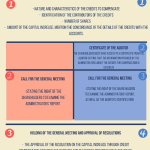
Capital increase through credit compensation in Spain
The capital increase through credit compensation reduces the risk of insolvency and avoids the declaration of insolvency proceedings, thus providing a solution for companies with high liabilities.

A digital disconnection policy is compulsory for companies in Spain
Article 18.2 of Law 10/2021 of 9 July on remote work establishes the obligation for companies to have an internal policy defining the modalities of exercising the right to disconnection and the training and awareness-raising actions for staff on the reasonable use of technological tools.

The uncompensated post-contractual non-competition clause in Spanish employment contracts
Article 21 of the Workers’ Statute (“ET”) regulates the post-contractual non-competition clause in Spain. One requirement for its validity establishes that an “adequate financial compensation is paid to the worker”.